

Shoulder Pain Chiropractor in St. Petersburg, FL
See a Shoulder Pain Chiropractor Who Tests Your Neck, Shoulder Blade, and Nerves First
5-Star Rated | Same-Day Visits | Shoulder Testing First
New Patient Discount:
Comprehensive Exam + 1st Session + Personal Treatment Plan
Why Choose Us
Why active adults with shoulder pain trust ELITE CHIROCARE


Dr. Raad tests the neck, shoulder blade, and nerve function before blaming the joint
If the findings call for imaging or a surgical opinion, he refers you and tells you why
Your plan gets revised when overhead reach stalls, never repeated out of habit
Offering dry needling and shockwave therapy for stubborn rotator cuff cases
State of the art equipment and modern techniques for the tissue around the blade
You leave knowing which movements to keep, which to pause, and how to sleep
Same-day appointment availability for a shoulder that flared this morning
Verified 5-star Google rating from real local patients
No pressure to commit to a long-term plan
Central St. Petersburg, on 4th Street North, close enough to come in before work

What We Offer
What we treat for shoulder pain in St. Petersburg
Rotator cuff pain, including the dull ache that shows up a day after you lift
Shoulder impingement and the sharp catch at a specific point in the arc of your reach
Pain lifting overhead, whether that is a press, a shelf, or a tennis serve
Pain on pressing and pulling movements such as bench press, push-ups, and rows
Shoulder pain that wakes you at night or will not let you sleep on that side
Shoulder blade pain, including the deep spot between the blade and the spine
Pain that radiates down the arm toward the elbow or forearm
Pins and needles or a weak grip arriving alongside the shoulder, pointing at the neck
Limited range of motion, including shoulders that feel locked, frozen, or stiff on waking
Nagging shoulder pain that improved partway months ago and then stalled there
Chiropractic adjustment of the neck, upper back, and ribs that govern how the blade moves
Soft tissue and manual therapy for the rotator cuff, upper back, and blade anchors
Dry needling and shockwave therapy, offered where manual care alone has plateaued
Corrective exercise for shoulder blade control and the upper back mechanics behind it
Meet your chiropractor
Dr. Raad, DC, MBA, MA

Shoulder cases tend to arrive with a story already attached to them. One patient has been told it is the rotator cuff. Another has been resting it since spring on the theory that time sorts shoulders out. Dr. Raad has treated the overhead athlete whose serve started catching, the lifter who cannot press without hitting a sharp point in the arc, and the person who has not lain on one side in a year. Every one of those patients could have been treated skillfully and gone nowhere, because skill applied to the wrong structure is still wasted. The variable that matters is whether anyone identified what was producing the pain before the treating started.
So nothing gets treated here on the strength of where a patient points. Pointing at the front of a shoulder narrows almost nothing down. Irritation at a nerve root in the neck, a shoulder blade that stops rotating partway through a lift, a stiff upper back, and genuine damage to a cuff tendon can all put pain in the same square inch of the arm, and care aimed at the wrong one of those is not merely slower. It is inert. So the first appointment goes to telling them apart. If what he finds points toward a tear or anything that belongs in front of an orthopedic surgeon, he refers you for imaging or for that opinion and says so plainly.
Shoulders are unusually honest about whether care is working, and he treats that as an obligation. Overhead reach either goes further than it did two weeks ago or it does not. You are either sleeping on that side again or still awake at two in the morning. A shoulder that has not changed in two weeks is telling him something about his own working diagnosis, and he would rather hear it early than late. The response is to go back to the examination, reconsider how much of this is coming from the neck or the blade, and change the approach. Sometimes that means adding dry needling or shockwave therapy for cuff tissue that has not answered manual work.
The other thing he insists on is that you leave able to explain your own shoulder to somebody else. Shoulders get undone between appointments more than almost any other area of the body, and often by something nobody thought to warn the patient about. You sleep on one of them every night. You reach overhead all day without deciding to. You go back to pressing on a Tuesday because Monday felt fine. Knowing which of those is provoking your own shoulder, and knowing the sign that says it is ready for load again, is worth more between appointments than any handout can be.
Dr. Raad holds a Doctor of Chiropractic degree, with an MBA and an MA alongside it, and years of clinical work on the shoulder, the neck and the upper back that governs how a shoulder blade moves. The training that bears on your case is the clinical half of that: orthopedic and neurological examination, the manual and soft tissue work the cuff and the scapular muscles respond to, and the rehab loading that rebuilds control of the blade. He practices at Elite ChiroCare & Injury Recovery, 3637 4th St N in central St. Petersburg, with state of the art equipment and modern techniques.
PATIENT Reviews



Our Approach
What the First Appointment Tests
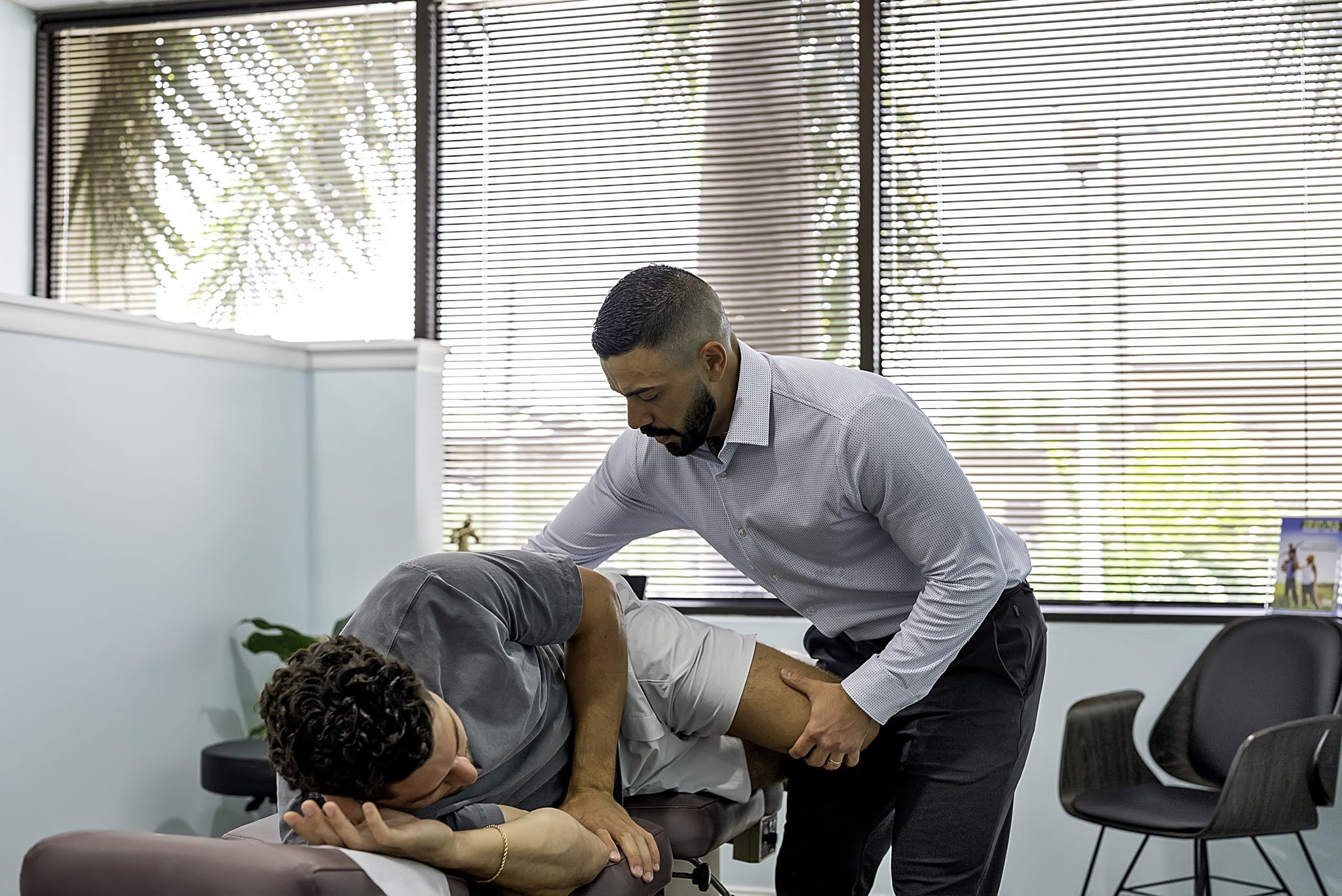
Your first appointment is an examination, and it covers more than the sore part. Dr. Raad runs orthopedic tests on the cuff and the joint itself, watches how your shoulder blade tracks as the arm travels overhead, checks what motion is available in your neck and upper back, and screens reflexes, strength and sensation if anything runs down into the arm or hand. Range of motion gets measured and written into your file rather than estimated by eye, so your next re-exam has a number to measure against. You leave with a working diagnosis and the reasoning behind it, which the next few visits will either confirm or correct. If the findings point toward a tear or something structural, he refers you for imaging or for a surgical opinion rather than treating around it.

Your Overhead Reach Decides What Happens Next
Shoulder progress is measurable, so the plan gets held to it. The markers are specific: how high the arm travels before the catch, whether you can lie on that side through a whole night, what pressing or pulling you tolerate without paying for it the next day. Dr. Raad rechecks those rather than asking how you feel today, because how you feel today has a lot to do with how you slept. Improvement moves care toward loading the shoulder and rebuilding control of the blade. Two flat weeks send him back to the exam findings, and the working diagnosis gets revisited before anything new is added. Care stops when your shoulder no longer needs it.

What You Do With Your Shoulder Between Visits
Your shoulder spends a few hours a month in this office and the rest of its life in your bed, your car and your gym. So the instructions you leave with are specific ones. Which position to sleep in, and what to do with a pillow under the arm so the joint is not compressed all night. Which overhead movements to keep using, because a shoulder that stops moving gets stiff. Which ones to shelve for now, and the particular sign that tells you they can go back in. Dr. Raad explains what each one is there to do, and all of it comes out of what your own examination showed.

Shoulder Pain Chiropractor in St. Petersburg, FL
Shoulder pain gets labeled rotator cuff almost by reflex, and that label is wrong often enough to matter. The shoulder is the most mobile joint in the body, and it pays for that range by depending on everything around it. The joint sits on a shoulder blade that has to rotate for your arm to clear your head, and that blade is held in place by muscles anchored to the neck and the upper back. Every nerve supplying the arm leaves through the neck. When one link stops contributing, the shoulder is where the strain shows up. It is why a deep ache between the blade and the spine, tingling into the hand, or pain running toward the elbow so often turns out to be a neck or nerve problem wearing a shoulder's clothes.
There is a reason shoulders punish delay in particular. A sore shoulder stops moving, and nobody decides to do it. You quit reaching for the top shelf. You stop sleeping on that side. You drop two gym movements without mentioning it to anyone. Over a few weeks the capsule tightens and the shoulder blade learns a workaround, and now there are two problems instead of one: the original irritation, plus a joint that has lost real range. That stiffness is slower to reverse than the pain that caused it. Night pain is worth acting on for a different reason. A shoulder that wakes you is a genuine clinical finding, and it helps narrow down what is going on. A shoulder that improved partway and stalled there has not finished healing.
The shoulders treated here belong to lifters, swimmers, tennis and pickleball players, tradespeople who work overhead all day, and people whose only injury was years of ordinary use. They arrive at 3637 4th St N, in central St. Petersburg, FL 33704. Some come from a few blocks away, some from the far side of Pinellas County, some from across the bay. Same-day availability is usually there, so a shoulder that flared this morning does not have to sit for a week first. The next step is a real examination: the neck, the upper back, the shoulder blade, the nerves and the joint itself, with your range of motion measured and recorded, before anyone decides what to treat. Book that exam online, or call or text (727) 498-6027.
Frequently Asked Questions
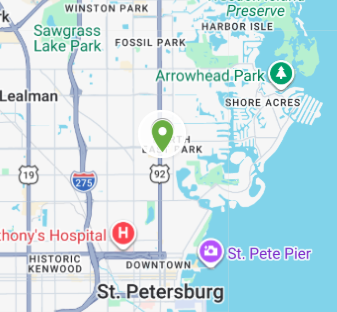
3637 4th St N, St. Petersburg, FL 33704
-
Elite ChiroCare & Injury Recovery is at 3637 4th St N, St. Petersburg, FL 33704. That is the middle of the city, within easy reach of the rest of Pinellas County. If you are unsure of the best route, or you want to check what times are open before you drive over, call or text (727) 498-6027.
-
Usually there is a slot. Same-day availability is held back deliberately, and a shoulder is a good reason to use it. The examination tells us more while the irritation is fresh and before you have spent two weeks guarding the arm and building a compensation around it. Call or text (727) 498-6027 and ask what is left on today's schedule.
One thing to be clear about: a few symptoms need urgent care rather than an appointment. Arm or hand weakness that is visibly getting worse, new clumsiness in both hands, a change in your balance or walking, or any new bowel or bladder changes should be assessed urgently, not booked.
-
Because the first question about a shoulder is what is producing the pain, which is a diagnostic question before it is a treatment one. An orthopedic surgeon is the right answer when there is a structural problem that needs a surgical solution, and Dr. Raad refers you for that opinion when the exam points there. Physical therapy is the comparison more shoulder patients are weighing, and the two overlap. What you get here is both halves in one place: Dr. Raad examines the neck, upper back, ribs and shoulder blade alongside the joint, adjusts the segments that test restricted, works the soft tissue around the cuff and the blade, and gives you the loading work to do between visits. If your shoulder would do better with a course of therapy running alongside this care, he will say so.
-
Then you need to know that, and you need to know it early. Dr. Raad does not guess, and he does not treat a shoulder indefinitely while it fails to improve. When your exam findings suggest a tear or structural damage, he refers you for the appropriate imaging or coordinates an orthopedic opinion. Plenty of shoulders that look surgical at first turn out to be neck, nerve, or shoulder blade problems and resolve with conservative care. Some genuinely need a surgeon. The examination is what separates the two, and either answer is a useful one.
-
Night pain is common with shoulder problems and it is also a useful diagnostic clue, so mention it at your visit. Lying on the shoulder compresses the joint and the tissues around it for hours at a stretch, and lying on the opposite side often lets the painful arm drop forward into a position that stretches irritated structures. Certain cuff and impingement patterns are known for waking people. It also compounds itself, because a whole night in a provoking position undoes daytime progress. Part of your plan will be how to position yourself at night so your shoulder gets the overnight hours to recover.